+91 94054 36852
 smundhada1369@gmail.com
 FF-08, Synnove Enclave, Vasna Bhayli, Vadodara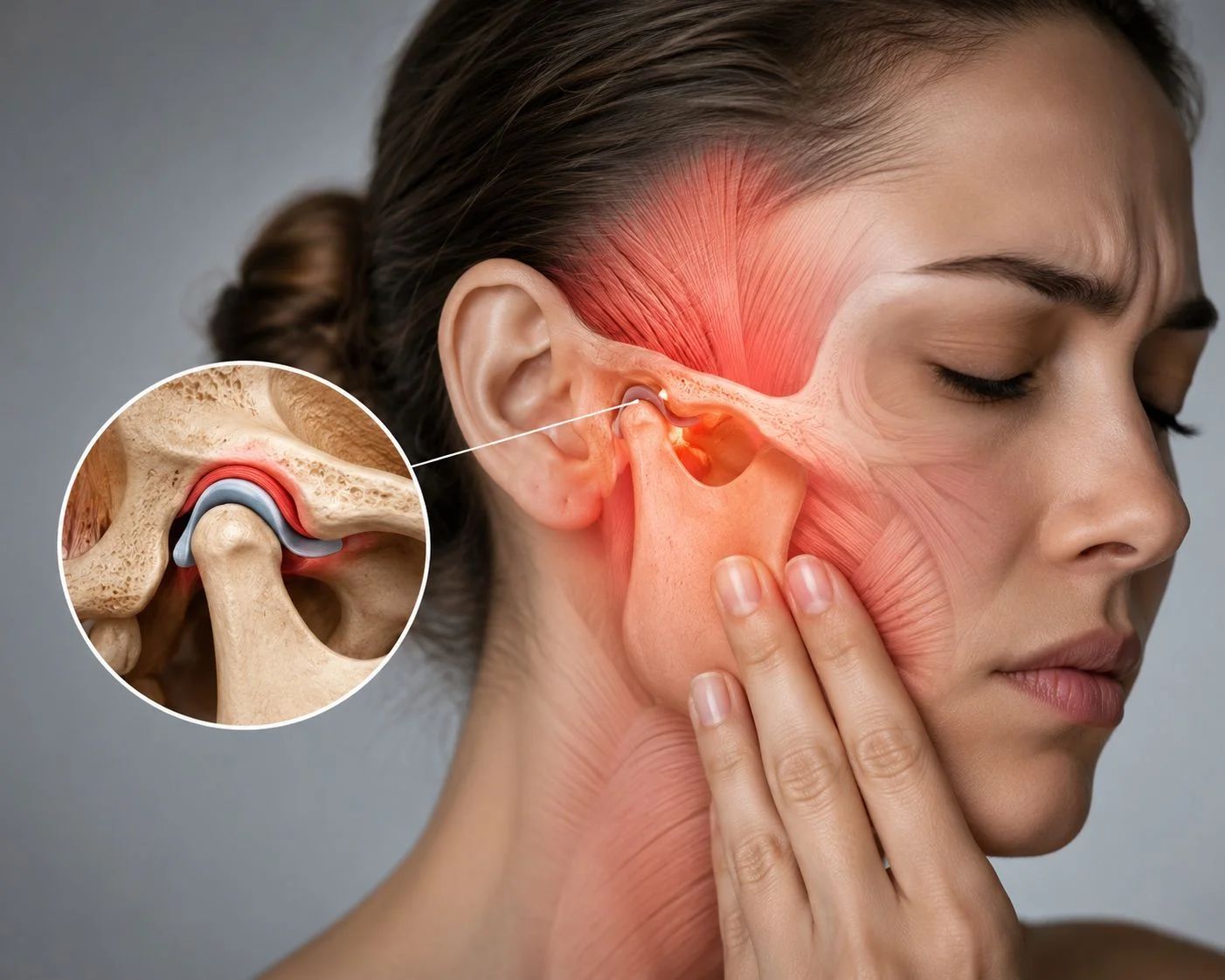
If you regularly wake up with a sore jaw, hear a clicking or popping sound when you chew, or get frequent headaches around your temples, there's a good chance you've been told it's 'just stress' or put down to sleeping in an odd position. In reality, these are some of the most common symptoms of a temporomandibular joint (TMJ) disorder — a problem with the joint that connects your lower jaw to your skull, located just in front of your ears on either side of your face. Because TMJ symptoms often show up as headaches, ear discomfort, or facial pain rather than obvious tooth or jaw problems, they're frequently misattributed to migraines, sinus issues, or general stress for months or even years before someone finally connects the dots back to their bite and jaw joint.
TMJ disorders can develop from several different causes, and often it's a combination of factors rather than just one. Bruxism — unconsciously grinding or clenching your teeth, especially during sleep — places enormous, repeated strain on the jaw joint and surrounding muscles, and many patients aren't even aware they do it until a dentist points out the telltale wear on their teeth. A misaligned bite, where your upper and lower teeth don't meet evenly, forces the jaw muscles to work harder and at odd angles to compensate, while stress, injury to the jaw, or even long-term poor posture can all contribute as well. At ToothWorks Dental Clinic, Dr. Shraddha Mandowara evaluates suspected TMJ cases by examining your bite, checking for muscle tenderness and joint sounds, and reviewing your jaw's range of motion — because effective treatment depends entirely on identifying what's actually driving your specific symptoms.
Treatment for TMJ disorders is rarely a single fix — it's usually a combination approach. Custom-fitted occlusal splints and night guards are among the most common and effective treatments, gently repositioning the jaw or cushioning the bite to take pressure off the joint while you sleep, which is often when clenching and grinding are at their worst. Where bruxism is a major factor, dedicated bruxism management helps protect both the joint and your teeth from further wear. In cases where an uneven bite is contributing to the problem, bite correction can address the underlying mechanical cause rather than just easing the symptoms. TMJ problems tend to get worse, not better, when left untreated, so if jaw pain, clicking, or unexplained headaches have become a regular part of your life, it's worth getting a proper jaw assessment at ToothWorks Dental Clinic in Vasna Bhayli, Vadodara rather than continuing to live with it.
 Emergency No. : +91 94054 36852